


Top 10 Tokyo Takeaways

Updated: Jun 30
First, allow me to mention that this list is actually my Top 10 Japan Takeaways … not just Tokyo — of course, “Japan” doesn’t have quite the same alliteration of its premier city; hence, the adjusted title. But what my family and I enjoyed about Japanese culture was just as pervasive in Kyoto as it was in Tokyo, or in Osaka, or in Hakone. And that’s what makes these few findings more like traditions than takeaways. It’s also what makes me want to book a repeat visit ASAP.
Now, before we get to the list, know that these are just the ten takeaways that resonated with me the most. However, I could easily include five or six more. It’s a wondrous country I’d encourage everyone to experience. And with that, here are the things I noticed that left an indelible mark.

Clean
I haven’t been to a country this clean. Ever. And it was incredibly refreshing. It’s pristine to the eyes. There are no bad odors. Frankly, Japan is a but a mere reminder of how responsible living should be. I looked up why Japan has such a reputation for cleanliness. Here’s what I found: “[It] stems from a deep-rooted cultural mindset of shared responsibility, where maintaining clean spaces is viewed as a way to respect others and the community.”
What’s crazy is you’ll be hard-pressed to find a trash can in any city. They are few and far in-between. You have to walk several blocks in some cases to find one. People carry plastic bags with them to hold their own personal trash, for example. And that’s what my wife & I did. You dispose of it when you finally do come across a garbage can. So sure, there’s an extra layer of responsibility put on the shoulders of each individual. But, to me, it’s worth it to be able to live in a clean environment like Japan has.

Safe
Japan is also the safest place I’ve ever visited. And when you’re a tourist, it’s a very relaxing sentiment to know that you have little to fear as you’re trying to enjoy your trip. But why are they so safe? Well, they’ve figured out what many other countries - U.S. included - haven’t. Strict gun control, cultural emphasis on community, low economic disparity (resulting in low levels of wealth inequality), and community policing. I’d also add they would simply consider anything but “safe” to be offensive [more on that later]. Again, knowing you’re in a country this safe just makes for a more peaceful and enjoyable vacay.

“Don’t eat while walking”
This goes back to the whole notion of cleanliness, I imagine. If you’re not eating while you’re walking, then you’re less likely to drop food or food containers. And that, obviously, aids in controlling litter. But there’s more to it than that. In Japanese culture, eating while walking is considered poor etiquette. I’s culturally frowned upon. I didn’t learn this until we purchased breakfast at 7-11 on our first day. That’s when my wife educated me. I must admit it took me aback. But a) I’m all for respecting other cultures and beliefs, especially when I’m in their land; and b) I like it, honestly. It gave our family time to chat and enjoy time together.

Public transportation
Talk about efficient. Always (and I mean ALWAYS) on time. It’s elementary to navigate their subway system since they put all of their signs in English. It’s easy to use buses & rails with the Suica card. And when you board a train, they have dedicated paths for entry to ensure a smoother onboarding and exiting process — a procedure that everyone respects and adheres to, which is key to any of these methods working consistently.
I’m from New York City. We have a robust public transportation system, yes. All of the modes are available. But not even NYC has an efficient one. Bottom line: New York can’t compare to Japan. And not just Tokyo. Rather any of the cities we were in. The Japanese have public transportation mastered.

Polite & Quiet
I mentioned earlier that the Japanese would consider anything but safety to be offensive. The reality is they consider a number of other things to also be offensive; anything that would disrupt an otherwise harmonious lifestyle. So, it’s very quiet there. No loud talking really anywhere, particularly not on public transportation. They consider it rude.
And they’re incredibly polite. For instance, in their culture if you’re using the escalator, it’s known that standers stay to the left and walkers go up on the right side. If a person who doesn’t know this - or doesn’t care - stands on the right, rather than continue walking up, a Japanese citizen will go up as far as they can until they reach just behind you. But instead of telling you to move, even when you’re the one who’s actually in the wrong, they’ll stay quiet and be patient; waiting until they get to the top. Because to tell you to “get out of the way” is rude to them. I have to chuckle even writing this. Americans could never!

Umbrellas
Anywhere you go, you will find small bins at the entrance with white or clear umbrellas. Store. Hotel. Subway system. Restaurant. Pretty much anywhere. That way if it rains, you can grab one and go. Doesn’t matter if you lose it. Doesn’t matter if you don’t bring it back. The only thing that matters is the thoughtful mindset of making sure you’re not inconvenienced by bad weather. It’s actually like an exchange program across the country. You might leave the umbrella you took from your hotel at a store six miles away, but someone else at some other time will inevitably end up leaving their umbrella at the hotel you were once staying. It all works out in the end. So simple yet so impressive.
Dining and Tipping
Not only is the food in Japan really good, but it’s incredibly inexpensive. Let’s start with the food itself. Yes, the culinary items they’re known for are amazing. From ramen to sushi, or from gyoza to tonkatsu. It’s all delicious. You may be surprised to learn, though, that the dishes they’ve adopted from other countries are making an impact, too. Their version of burgers. Their version of pizza. Their version of curry. Their version of pasta, specifically the carbonara we had. The latter was better than any carbonara (in the states) I’ve ever tasted. Easily. I can’t more emphatically recommend Japanese cuisine.
But here’s the best part. What you owe for the food is what you owe. There is no tipping in Japan. What reason for this, you’re thinking? Now, stop me if you’ve read this before … they considered it rude. But of course. I do want to be transparent; in the Golden Gai, the immensely popular bar scene in Tokyo, I saw tipping jars. However, that was far more of the outlier and more indicative of the area we were in. 99% of the time we did not have to tip for anything.
7-11 / Lawson / Family Mart
Whatever we, Americans, think of 7-11, that ain’t their 7-11. In Japan it’s a superior model focused on a quality experience. Clean. It offers an abundance of food. Real food with whole meals. Not just snacks like in the U.S. You can pay bills at their 7-11. You can ship packages from their 7-11. Relative to what we know of our 7-11’s, the locations in Japan are otherworldly. And the awesome thing is they have two major competitors (Lawson; Family Mart) that provide a similar offering. Insane. Might be one of the top three things I miss the most about Japan.

No jaywalking
I won’t spend too much time on this callout except to say the Japanese don’t cross the street until the sign says so. Doesn’t matter if a car is coming or not. They wait. So, for two weeks, we did the same thing. We waited. My brain had to do mental gymnastics around the notion. For years I would go to work in Manhattan and jaywalking is practically a religion. But as I suggested earlier, it’s about respecting THEIR culture. Never mind what I learned to do all throughout my life in New York City. Did it feel odd at times? Certainly! But if not only for me and my earnest belief of respecting other cultures, it was also about showing my kids the importance of respecting other cultural norms when you’re in that respective society.
Oh, also, it’s illegal to jaywalk in Japan. So, there’s that, too. And the penalties are serious and hefty.

History
Here in America, in 2026, we’re celebrating 250 years. It’s something to be proud of. And I would never suggest less. That aside, it’s humorous to think of our 250-year history when you’re standing in Nijo Castle that’s 423 years old, or you’re taking in the sights & sounds at Katsuo-ji Temple that’s over a whopping 1,300 years old. Yeah, 250 years is light work to them. And I’m a huge history buff. The opportunity to bask in centuries upon centuries of culture, architecture, and storytelling was not lost on me.
Honorable Mention: Catering to the blind
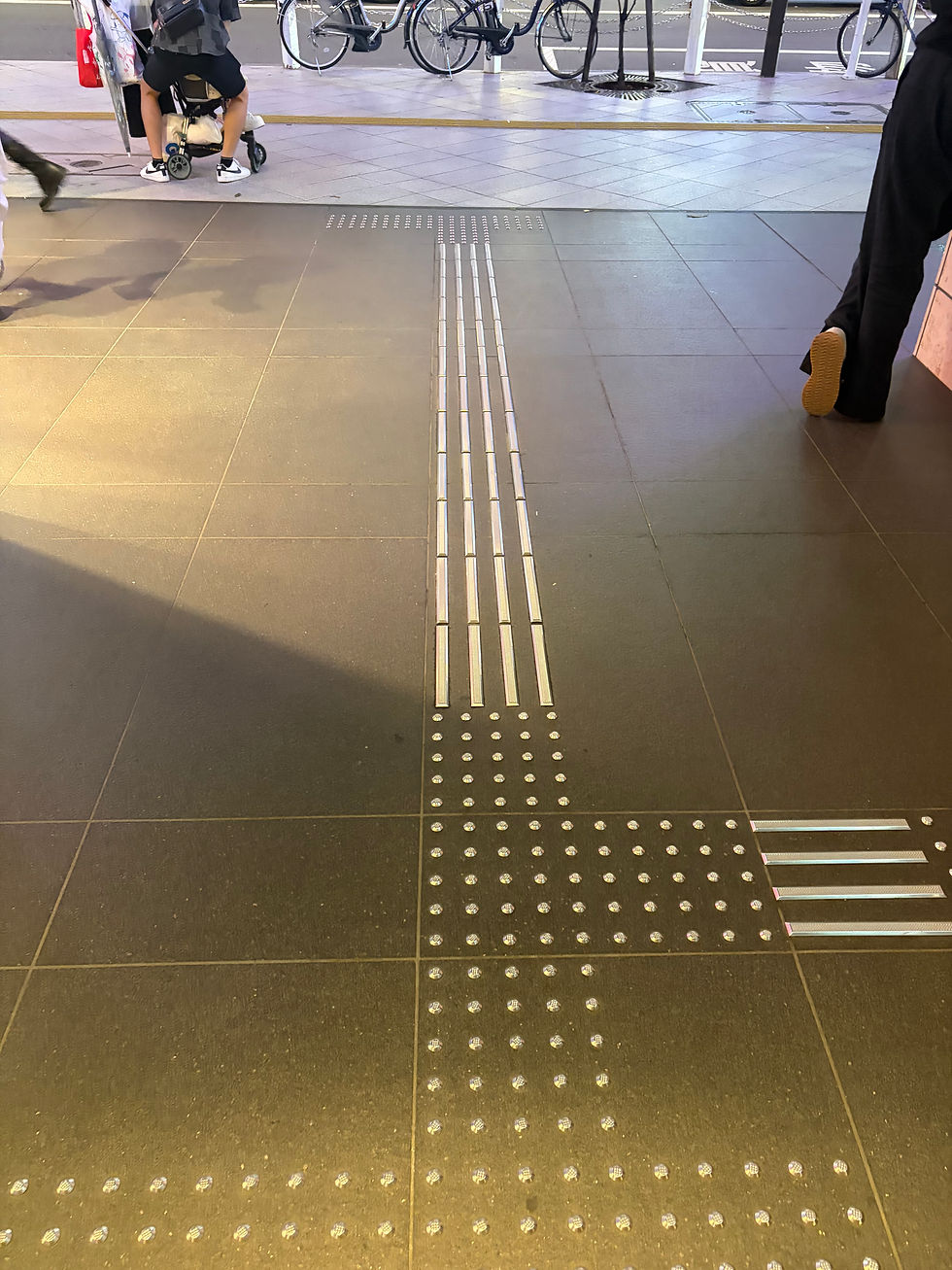
While not in my top ten, I do want to share with you how heartwarming it was to see how well and how intentional the Japanese are to creating a world where the blind are considered as equally as any other local. On every bidet (toilet) they have tactile markers. And on each street they have tactile paving on the ground. You will see braille in many other places, as well. If I were blind, for sure I’d want to live in Japan. No one caters to that group of people like the Japanese.

Until next time, Japan 🇯🇵 “さようなら“ Sayōnara!


Comments